
- Categories:
- Equipment
High Water Table Septic Solutions: Managing Wastewater When Groundwater Is Close to the Surface
For many property owners, installing a septic system is relatively straightforward. But when high groundwater enters the equation, wastewater treatment becomes significantly more complex.
High water table conditions can limit drainfield performance, increase the risk of system failure, and create challenges for homeowners, builders, engineers, and installers alike. Understanding the available septic solutions can help property owners comply with local regulations, protect groundwater resources, and ensure long-term system performance.
What Is a High Water Table?
The water table is the level below the ground where soil becomes saturated with water. In some areas, groundwater may sit several feet below the surface. In other locations, particularly coastal regions and low-lying areas, groundwater can be much closer to the surface — common in coastal communities, flood-prone regions, areas with poor drainage, low-elevation properties, and locations with seasonal groundwater fluctuations. When groundwater is too close to a septic drainfield, wastewater may not receive adequate treatment before reaching groundwater supplies.
Why High Water Tables Create Septic Challenges
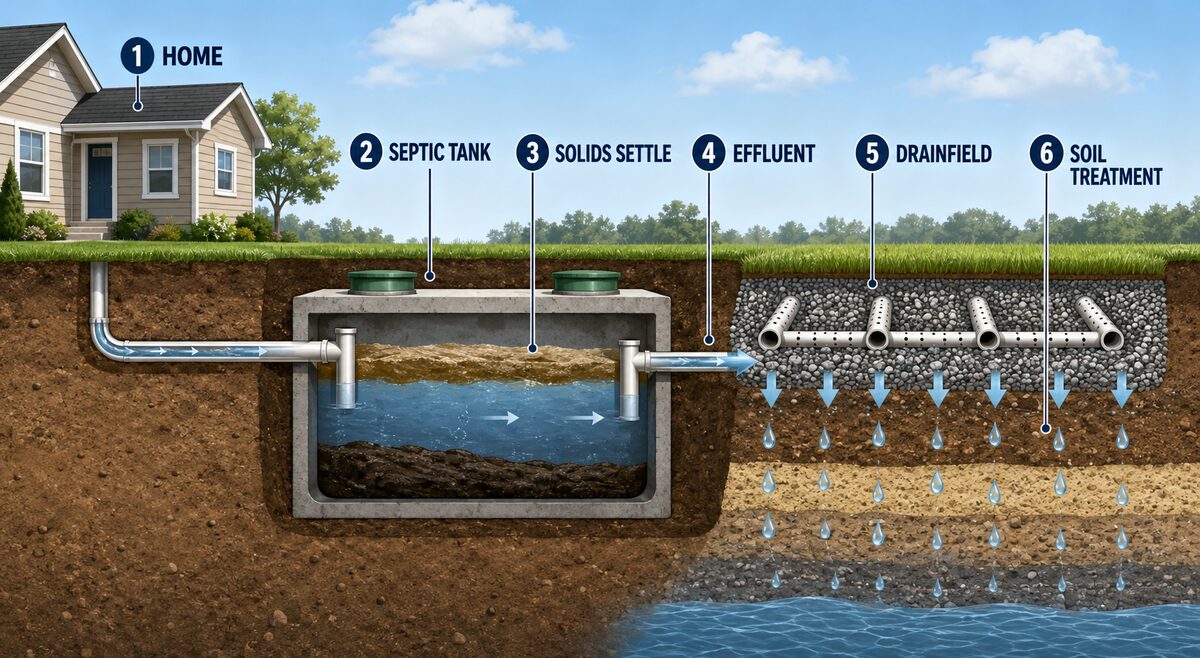
Traditional septic systems rely on soil to filter and treat wastewater after it leaves the septic tank. A healthy drainfield depends on unsaturated soil containing both air and microorganisms that help remove contaminants. When groundwater rises too close to the drainfield, several problems can occur:
- Reduced wastewater treatment
- Drainfield saturation
- Sewage backups
- Surface ponding
- Odors
- Environmental contamination
- Premature system failure
This is why many jurisdictions require minimum vertical separation between the drainfield and seasonal high groundwater levels.
Signs a Property May Have a High Water Table
Before selecting a septic system, evaluate site conditions for potential groundwater issues. Common indicators include:
- Standing water after rainstorms
- Persistently wet soil
- Nearby canals, lakes, or wetlands
- Low-lying property elevations
- Seasonal flooding
- Water appearing in excavation trenches
- Poor drainage throughout the site
A professional site evaluation and soil testing program can help determine groundwater levels and suitable system options.
Septic Solutions for High Water Table Sites
Not every property with a high water table requires the same solution. The most effective approach depends on soil conditions, property size, groundwater elevation, local regulations, and wastewater volume.
1. Aerobic Treatment Units (ATUs)
Aerobic Treatment Units are frequently specified when enhanced wastewater treatment is needed. Unlike conventional septic systems, ATUs introduce oxygen into the treatment process, allowing aerobic bacteria to break down waste more efficiently. Benefits include improved effluent quality, reduced organic loading, smaller disposal field requirements, enhanced environmental protection, and greater flexibility on challenging sites. Because ATUs produce a higher quality effluent, they are often a preferred solution on properties with environmental constraints.
(Related reading: Septic Tank vs. ATU: Which Wastewater Treatment System Is Right for Your Project?)
2. Mounded Drainfield Systems
A mound system raises the wastewater treatment area above existing grade. Instead of placing the drainfield below the surface, imported sand and engineered materials create a treatment area higher above groundwater. Benefits include increased separation from groundwater, improved soil treatment capacity, and suitability for challenging sites — though these systems come with higher installation costs, a larger footprint, and additional maintenance considerations.
3. Low-Pressure Distribution Systems
Low-pressure distribution systems utilize pumps to distribute wastewater evenly throughout the disposal field. This approach can improve treatment performance by reducing localized overloading, offering more uniform wastewater distribution, improved drainfield utilization, and better performance in difficult soils. These systems are commonly used in conjunction with other advanced wastewater treatment methods.
4. Drip Dispersal Systems
Drip dispersal systems distribute treated wastewater through a network of shallow tubing and are often paired with advanced treatment technologies such as ATUs. Benefits include precise wastewater distribution, reduced disturbance to the site, flexible design options, and usefulness on irregular properties.
5. Elevated Drainfield Solutions
In some situations, elevating the drainfield above natural grade can provide sufficient separation between groundwater and wastewater dispersal areas. These engineered systems help ensure wastewater continues receiving proper treatment before entering the surrounding environment.
Design Considerations for High Water Table Sites
Successful wastewater treatment starts with proper design. Key factors include:
- Soil Evaluation — understanding soil texture and infiltration rates helps determine system suitability.
- Seasonal Groundwater Levels — groundwater can fluctuate dramatically throughout the year, making seasonal measurements important.
- Drainage Conditions — surface water management plays a significant role in septic performance. Poor site drainage can further increase groundwater-related challenges.
- Property Layout — lot size, setbacks, structures, and landscape features all influence system design.
The Importance of Stormwater Management
Many septic problems are actually made worse by poor surface drainage. Downspouts, ponding water, and improperly graded landscapes can increase soil saturation around wastewater treatment areas.
Best practices include:
- Diverting roof runoff away from septic areas
- Correcting drainage problems
- Avoiding directing irrigation toward the drainfield
- Maintaining positive grading around structures
(Related reading: 4 Best Practices Every Drainage Pro Should Know: How to Protect Properties from Costly Runoff Problems)
Common Mistakes to Avoid
- Ignoring groundwater conditions — a system that works well on one property may fail on another due to groundwater differences.
- Choosing based on cost alone — the least expensive option may not meet long-term performance requirements.
- Driving over drainfields — vehicle traffic can compact soils and damage system components.
- Overloading the system — excessive water use can overwhelm treatment capacity and contribute to failure.
- Skipping maintenance — even advanced wastewater treatment systems require regular inspections and service.
High Water Tables Don’t Mean Septic Systems Are Impossible
While high groundwater conditions create additional challenges, they do not necessarily prevent septic system installation. Today’s wastewater professionals have access to advanced treatment technologies and engineered system designs that can provide reliable performance even on difficult sites.
The key is selecting the right solution for the property’s conditions and working with experienced professionals to ensure proper design, installation, and long-term maintenance. For many Florida and coastal properties, that may mean considering advanced options such as Aerobic Treatment Units, mound systems, pressure distribution systems, or other engineered wastewater treatment solutions.