
- Categories:
- Irrigation
Understanding Distribution Uniformity (DU) in Irrigation Systems: Why It Matters
When evaluating the performance of an irrigation system, one of the most important measurements is Distribution Uniformity (DU). Distribution Uniformity measures how evenly water is applied across a landscape and plays a critical role in irrigation efficiency, water conservation, and overall plant health.
Whether you’re managing a residential lawn, commercial property, sports field, or municipal landscape, understanding DU can help reduce water waste, lower operating costs, and improve landscape performance.
What Is Distribution Uniformity in Irrigation?
Distribution Uniformity (DU) is a measure of how consistently an irrigation system distributes water throughout a designated area. Since no irrigation system applies water perfectly evenly, DU helps identify how much variation exists between the driest and wettest areas being irrigated.
The most commonly used measurement is Low Quarter Distribution Uniformity (DUlq), which compares the average amount of water collected in the lowest-performing 25% of a test area to the overall average application rate.
A higher DU indicates more uniform water distribution, while a lower DU suggests significant inconsistencies that can lead to poor irrigation performance.
Why Distribution Uniformity Is Important for Irrigation Efficiency and Water Conservation
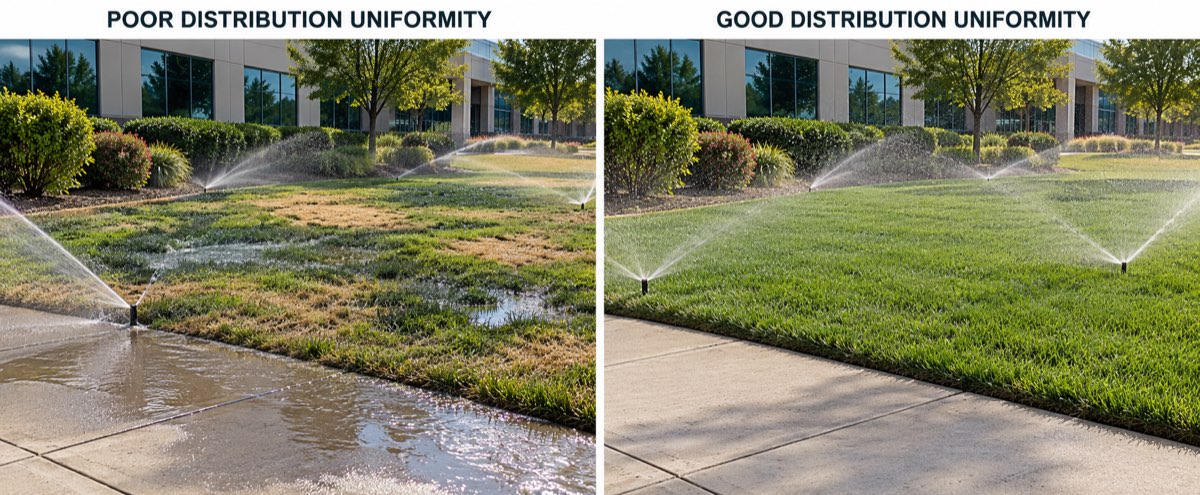
Uneven water distribution creates challenges throughout a landscape.
When some areas receive less water than others, irrigation schedules are often extended to compensate for dry spots. As a result, areas already receiving adequate water become overwatered. This can lead to:
- Increased water consumption
- Higher utility costs
- Runoff and erosion
- Nutrient leaching
- Disease pressure in turf and plants
- Inconsistent landscape appearance
Improving distribution uniformity allows landscapes to receive the water they need without excessive irrigation, reducing waste while promoting healthier plant growth.
What Is a Good Distribution Uniformity Score?
Distribution Uniformity scores generally fall into the following categories:
- 80% or higher: Excellent
- 70–80%: Good
- 60–70%: Fair
- Below 60%: Poor
Most professionally designed and maintained irrigation systems should achieve a DU of at least 70%. Systems operating below this level often require corrective action to improve efficiency and ensure adequate coverage across the entire irrigated area.
Higher DU values allow irrigation managers to water more accurately while reducing unnecessary water use.
How to Measure Distribution Uniformity with a Catch Can Test
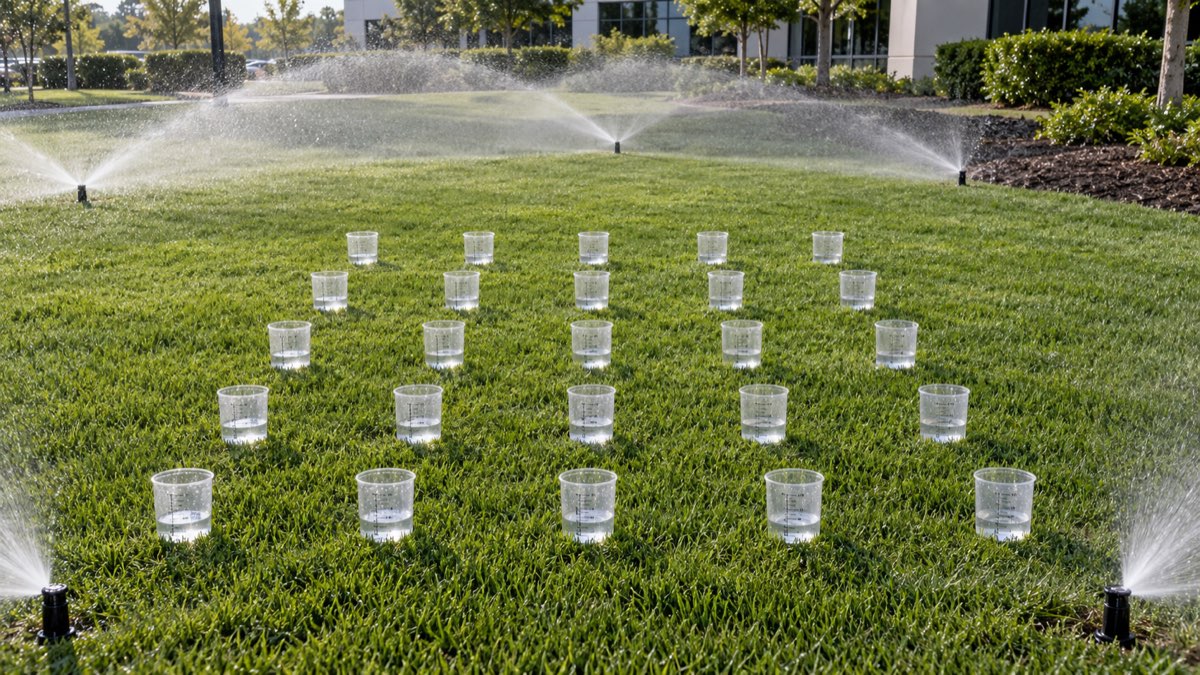
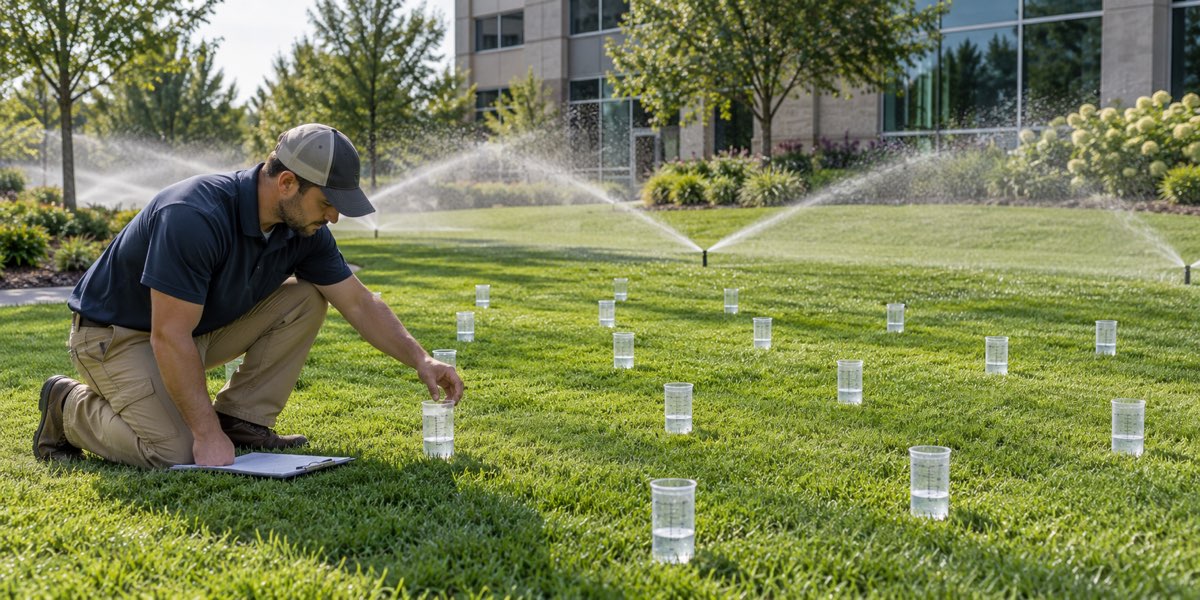
A DU evaluation is commonly performed using a catch can test, which is a standard component of many irrigation audits.
The process is relatively straightforward:
- Place identical catch cans throughout the irrigated area.
- Operate the irrigation zone for a predetermined length of time.
- Measure the water collected in each container.
- Calculate the average collection amount.
- Compare the average of the lowest quarter of measurements to the overall average.
The resulting value provides a snapshot of how evenly the system distributes water across the landscape.
Catch can testing can reveal performance issues that may not be visible during a simple visual inspection.
Common Causes of Poor Distribution Uniformity in Sprinkler Systems
Several factors can negatively impact irrigation system performance and lower DU scores.
Poor Sprinkler Head Spacing
Sprinkler heads must be installed with proper spacing and head-to-head coverage. Improper spacing often results in dry areas, weak overlap, and inconsistent water distribution.
Incorrect Water Pressure Problems
Water pressure that is too high or too low can distort spray patterns and reduce nozzle performance. Pressure fluctuations are among the most common causes of poor irrigation uniformity.
Mismatched Irrigation Nozzles
Mixing nozzles with different precipitation rates on the same irrigation zone creates uneven application rates. Some areas may receive significantly more water than others during a watering cycle.
Clogged or Worn Sprinkler Components
Nozzles, filters, and sprinkler bodies can become clogged with debris or wear over time. These issues alter spray patterns and reduce performance.
Wind Conditions
Wind can significantly impact spray irrigation systems, especially fixed spray heads. Water drift reduces uniformity and often causes irrigation water to miss its intended target.
Outdated Irrigation System Design
Older irrigation systems may not have been designed to current efficiency standards. Poor zoning, inadequate pipe sizing, and outdated components can all contribute to poor DU.
Distribution Uniformity vs. Irrigation Efficiency
Although they are closely related, distribution uniformity and irrigation efficiency are not the same measurement.
Distribution Uniformity evaluates how evenly water is applied throughout an irrigation zone.
Irrigation Efficiency measures how effectively applied water reaches and benefits the landscape while accounting for losses caused by runoff, evaporation, deep percolation, and wind drift.
An irrigation system cannot achieve high efficiency without good distribution uniformity. Improving DU is often one of the most effective ways to improve overall irrigation performance.
How to Improve Distribution Uniformity in an Irrigation System
The good news is that many DU issues can be corrected through routine maintenance and strategic system upgrades.
Some of the most effective improvements include:
Install Pressure-Regulating Sprinkler Bodies
Pressure-regulating sprinkler bodies and valves help maintain optimal operating pressure, improving spray consistency and nozzle performance.
Upgrade to High-Efficiency Rotary Nozzles
Modern rotary nozzles and high-efficiency spray nozzles provide improved water distribution while reducing runoff and misting.
Use Matched Precipitation Rate Nozzles
Ensuring all nozzles within a zone apply water at similar rates helps maintain more consistent coverage.
Conduct Routine Irrigation Maintenance
Regular inspections can identify clogged nozzles, broken heads, leaks, and other issues before they significantly impact system performance.
Install Smart Irrigation Controllers
Smart irrigation controllers and weather-based systems can adjust run times based on site conditions, helping maximize efficiency and reduce unnecessary watering.
Perform Periodic Irrigation Audits
Routine audits provide valuable data on system performance and help identify opportunities for ongoing improvement.
The Benefits of High Distribution Uniformity for Commercial Landscapers
Improving DU offers a number of long-term benefits for property owners and landscape professionals, including:
- Reduced water waste
- Lower water bills
- Improved plant health
- More consistent landscape appearance
- Reduced runoff and erosion
- Better compliance with water conservation initiatives
- Increased system efficiency
- Lower maintenance costs over time
For commercial properties, municipalities, HOAs, and large landscape installations, improving distribution uniformity can result in significant water savings while enhancing overall landscape quality.